







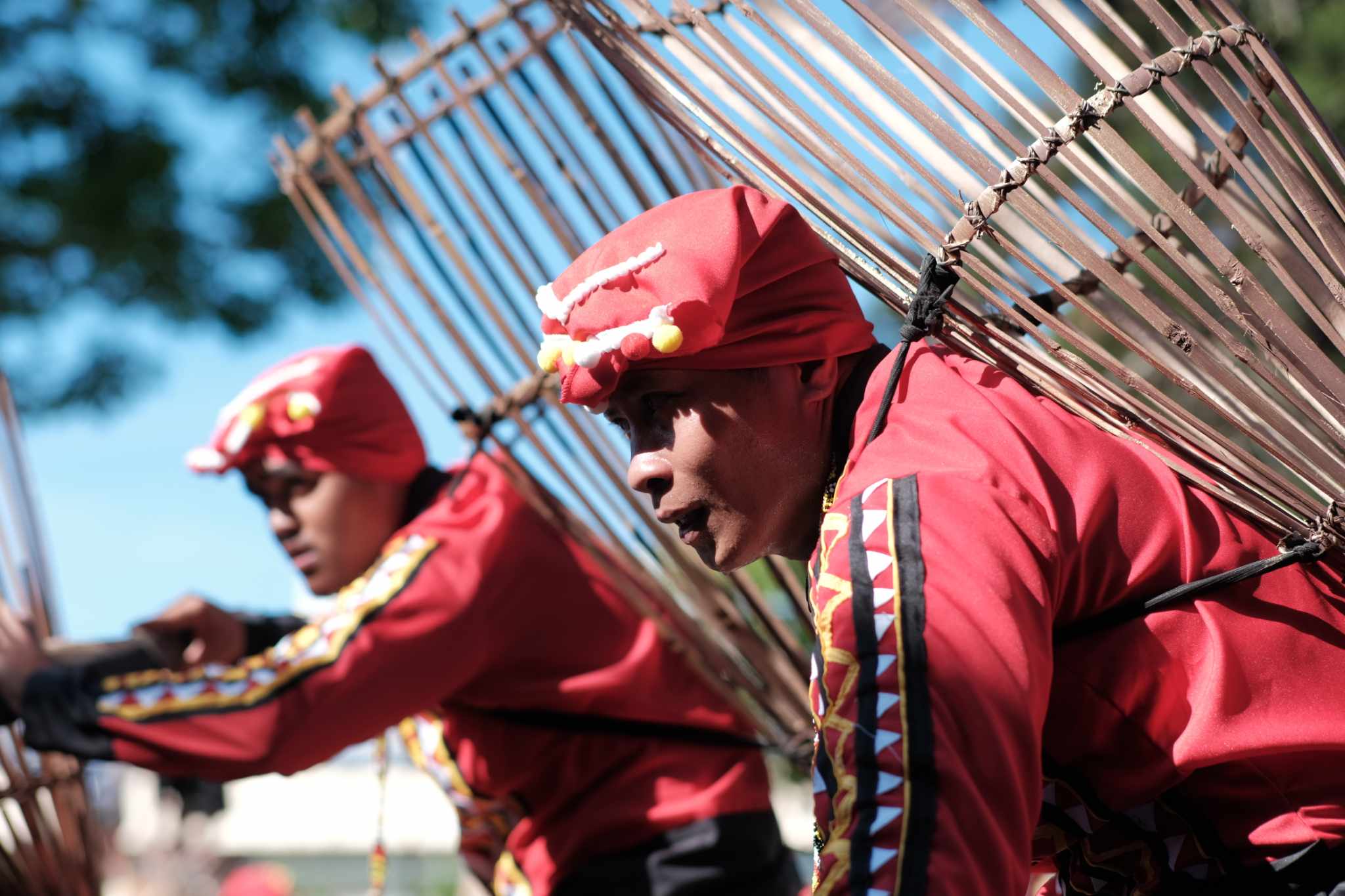
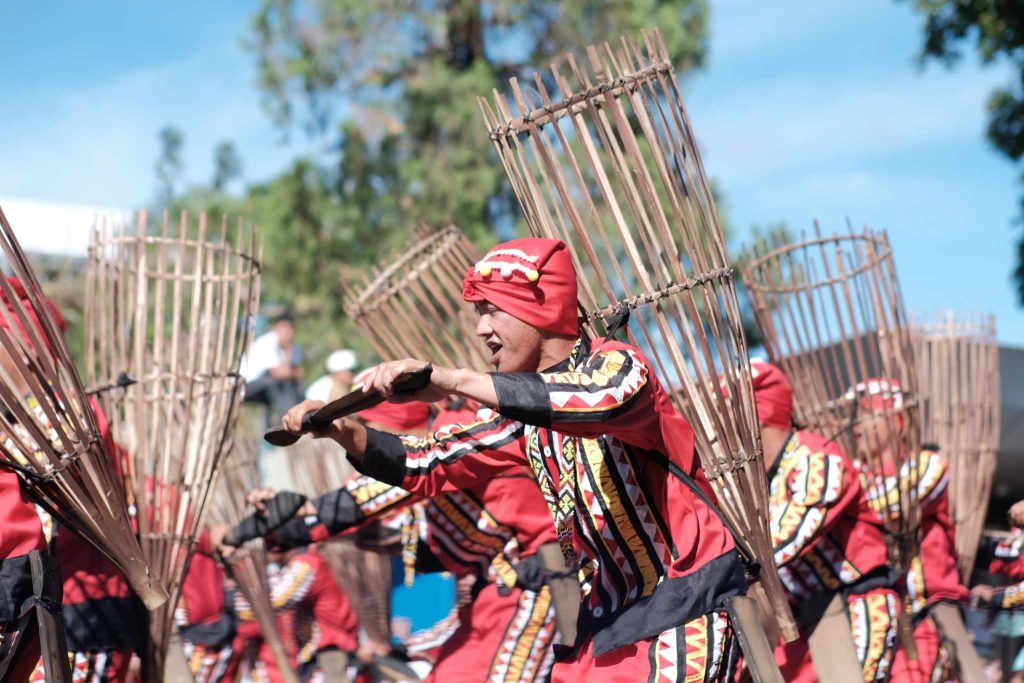
Dancers from Kaamulan 2025 street dancing and ground presentation champion, Malaybalay City
BukidnonNews.Net photo by Art Vincent Pańares
MALAYBALAY CITY (BukidnonNews.Net/16 April 2026) – Nine contingents from Bukidnon’s two cities and seven of its 20 municipalities will compete on April 18 in the Kaamulan 2026 Street Dancing, Ground Presentation, and Float competitions in Malaybalay City, a key event of the province’s annual festival running March 19 to April 23. The performances will interpret this year’s theme through choreography, ritual, and storytelling rooted in indigenous traditions of community and peace-building.
The competing contingents, in official sequence, are:
1st – Valencia City
2nd – Manolo Fortich
3rd – Malitbog
4th – San Fernando
5th – Don Carlos
6th – Talakag
7th – Maramag
8th – Malaybalay City
9th – Kalilangan
This year’s theme—“Rooted in tradition, guided by Magbabaya, rising as one beyond challenges” (“Nakagamut hu kagkinaraan, giniyahan hi Magbabaya, naka tirayeg ta nagsabuwa bisan inu ka legen”)—frames what has become one of Kaamulan’s most enduring narratives: the telling of peace through performance grounded in tradition.
A competition shaped by last year’s stories
The momentum into 2026 carries the imprint of Kaamulan 2025, where Malaybalay City swept both the Street Dancing and Ground Presentation competitions, while Libona captured the Float title.
Malaybalay’s winning piece drew from oral histories in Sitio Cabacungan, Barangay Linabo, recounting the community’s confrontation with the feared Salarung. The story unfolded from repeated loss to collective action—through the leadership of bagani warriors and ritual practices such as pangampo—until the community drove the creature away. The victory was marked by a kaliga, a seven-day ritual of dances including dugso, binaylan, and saut, affirming unity, protection, and spiritual grounding.
Kaamulan 2025 Results:
Street Dancing Competition
Champion – Malaybalay City
1st Runner-up – Valencia City
2nd Runner-up – Libona
3rd Runner-up – Cabanglasan
Ground Presentation Competition
Champion – Malaybalay City
1st Runner-up – Libona
2nd Runner-up – Cabanglasan
3rd Runner-up – Valencia City
Float Competition
Champion – Libona
1st Runner-up – Malaybalay City
2nd Runner-up – Valencia City
3rd Runner-up – Cabanglasan
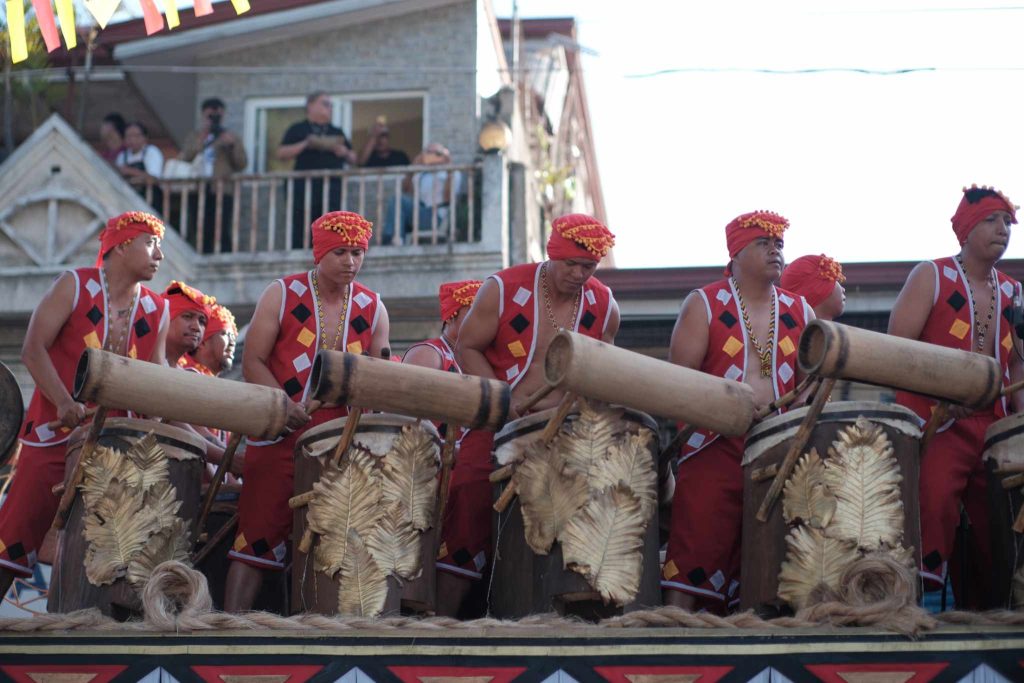
Musicians from Kaamulan 2025 street dancing 1st runner up and float competition 2nd runner up Valencia City
BukidnonNews.Net photo by Art Vincent Pańares
The streets as a space for peace-making
While the street dancing competition draws the largest crowds each year, its significance has deepened beyond spectacle.
Across decades, contingents have used choreography, chant, and ritual to dramatize how communities confront conflict and restore balance—whether through mediation, intermarriage, or shared spiritual practice.
In 2023, the Kalilangan contingent portrayed a peace pact between the Menuvu and Meranaw after violent encounters, resolved through negotiation and intermarriage. Another presentation from the same municipality, Kukuman ta Rezo, depicted conflict along the Maradugao River that ended with a Tampuda hu Balagon ritual and a marriage sealing reconciliation.
In 2025, Valencia City returned to the theme of inter-tribal conflict along the Pulangi River, where tensions between Menuvu/Manobo and Talaandig groups were resolved through a unifying marriage, restoring both social ties and respect for shared territory.
Memory, conflict, and resolution
Kaamulan’s performances are rooted in oral tradition, where stories of conflict are inseparable from their resolution.
In 2011, Malaybalay City’s Kulahi Hu Kaglandang Iglalawan depicted the Tampuda Hu Balagen, settling conflicts among Maranao, Talaandig, Maguindanaon, and Manobo groups. Central to the narrative was a “jar of peace,” symbolizing the restoration of harmony and linking the origins of Kaamulan to a wedding celebration.
In the same year, some contingents depicted warfare and heroism, including the use of bolos in performances such as that of Kadingilan, while others highlighted planting, harvesting, and courtship rituals alongside peace pacts.
In 2012, Malitbog featured the Higaonon Piglumunan hu mga Bagani, narrating a conflict with lowlanders over environmental exploitation that ended through a Tambuda hu Balagon.
In 2015, Kitaotao presented the story of Apo Tambunaway and Apo Imamalu, whose separation into Lumad and Moro lineages led to conflict but was eventually resolved through agreement and renewed kinship.
These narratives reflect long-standing ties between indigenous and Moro communities in Mindanao, shaped by centuries of interaction, migration, and cultural exchange.
Gathering as one
From its origin in 1974, derived from the Binukid word “amul” or “to gather,” Kaamulan has always been about convergence.
As the April 18 competitions approach, the street dancing event is expected to draw thousands of spectators, with nine contingents set to interpret this year’s theme through performances grounded in tradition.(BukidnonNews.Net)