






By K.A. Ga, BukidnonNews.Net volunteer
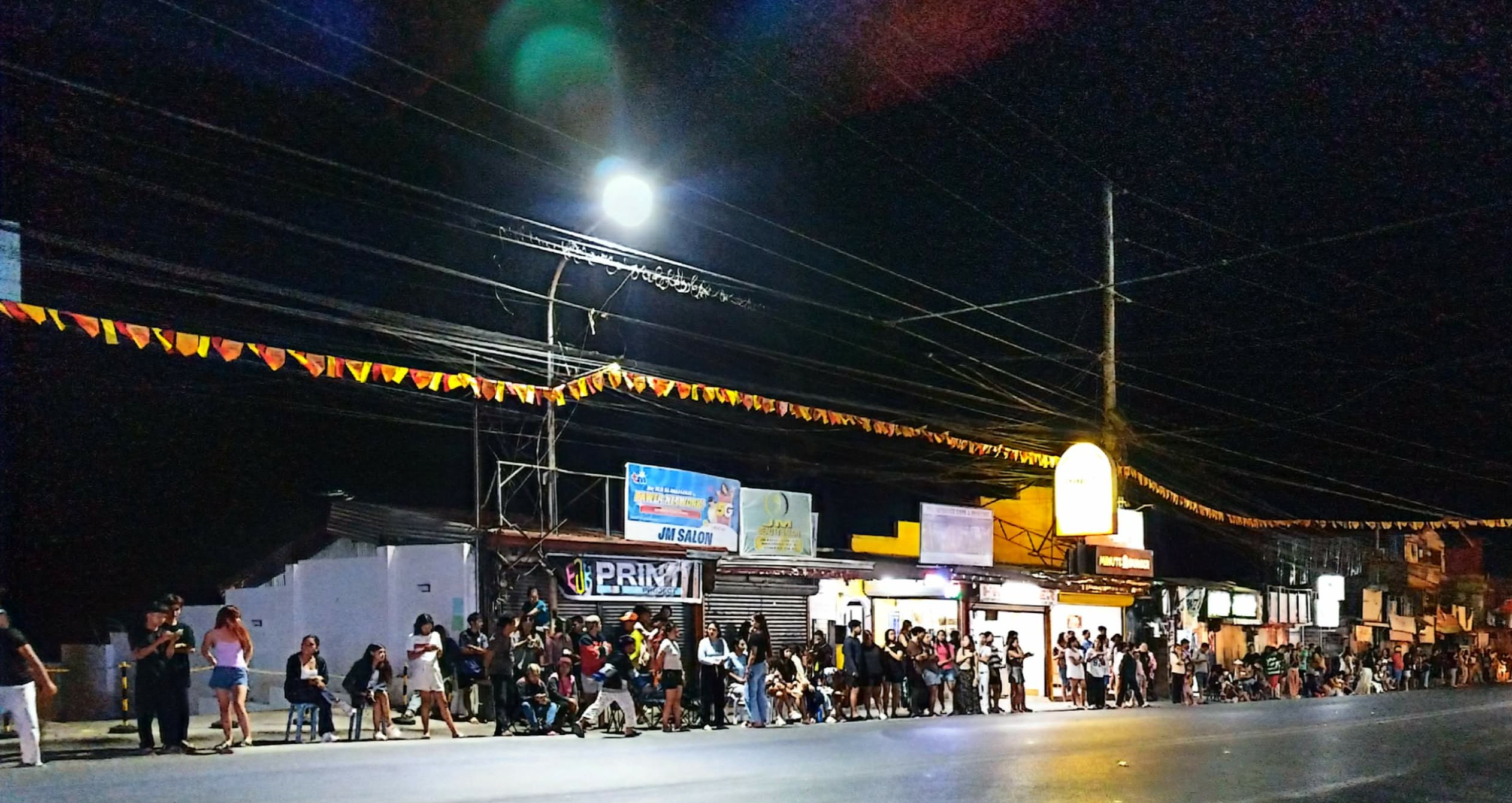
MALAYBALAY CITY (BukidnonNews.Net/17 April 2026) In the week leading up to April 18, 2026, crowds steadily gathered along Fortich Street to watch the nightly practices of nine Kaamulan street dancing contingents, turning what was once a routine rehearsal into a public spectacle.
A volunteer documenter who visited the site on consecutive nights observed how the practice sessions drew not only nearby residents but also visitors from interior barangays and neighboring towns. What began as a simple pastime—locals watching from windows or bringing chairs outside their homes—gradually expanded into a larger, more diverse audience.
Based on the schedule provided by the Traffic Management Center, contingents were assigned practice nights throughout April. Don Carlos rehearsed on April 6, followed by Maramag on April 7, Valencia on April 8, Talakag on April 9, and Malaybalay on April 10. The following week, Manolo Fortich practiced on April 13, Malitbog on April 14, San Fernando on April 15, and Kalilangan and Valencia on April 16. April 17 was allotted for cleaning and final preparations, ahead of the main street dancing event on April 18.
On the nights observed, multiple contingents were present and conducted their rehearsals one after another along the same stretch of road. Despite the number of groups, the sequence remained orderly, allowing each contingent to practice without disrupting the others.
Among those drawn to the nightly practices was C.E., a high school student on vacation from Gingoog City who was staying with close relatives. She expressed eagerness to watch the rehearsals, describing the experience as something new.
“We don’t have this experience back home,” she said, adding that on nights when no one could accompany her, she would simply listen from her relatives’ house to the sounds of drums and instruments echoing through the area.
Families, groups of friends, and many students lined the sidewalks, often staying until past midnight. Some spectators remained in one spot, while others moved around to find better vantage points. Supporters of specific contingents were also present, joining the nightly gatherings to watch their representatives rehearse.
One spectator from a nearby town shared that they would ride a bus to the city and wait for another bus on the way home, treating the trip as a bonding experience with friends.
While some brought food and drinks, others came solely to observe. At the same time, some residents chose not to attend the rehearsals, preferring to wait for the actual performances so as not to “spoil” the experience.
The presence of itinerant vendors added to the scene, offering water, soft drinks, and snacks such as chicharron and boiled peanuts to the growing crowd.
Despite being practice sessions, the dancers performed with notable intensity. The documenter observed that many participants already wore parts of their costumes and handled their props during rehearsals. Even late into the night, the groups remained coordinated and energetic, maintaining a performance level that engaged the audience.
Crowd behavior remained orderly throughout the observed nights. Spectators stayed along the sidewalks, allowing the performers sufficient space to rehearse along the closed section of Fortich Street, from the former Pine Hills Hotel to Plaza Rizal. Police and traffic personnel were visibly present, managing safety and ensuring smooth movement in the area.
However, not all experiences during the nightly gatherings were positive.
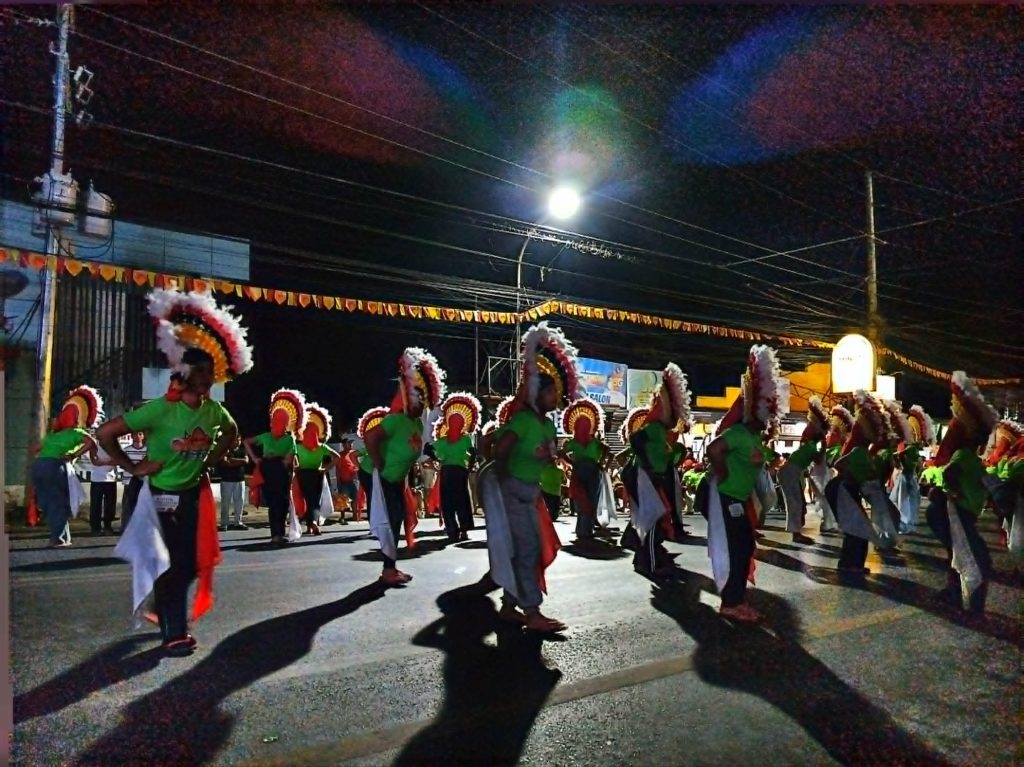
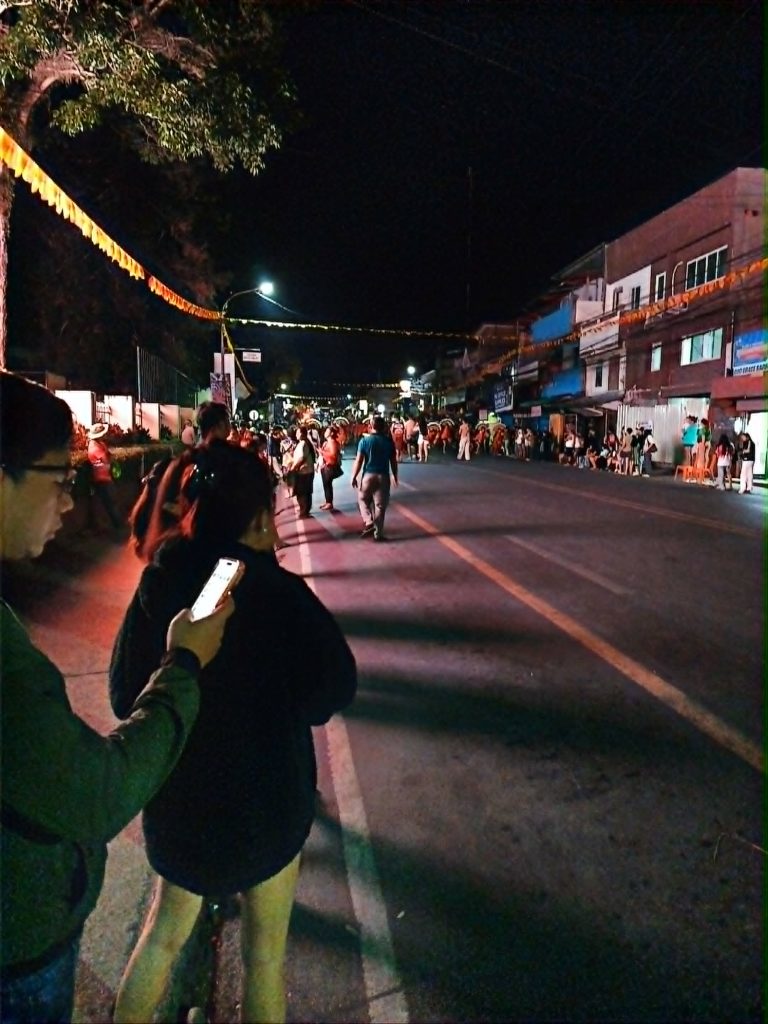
A businesswoman took to social media to express disappointment after their food business was reportedly hit by thieves on separate nights while they were out watching the practices. According to her post, a microwave and a gas tank were stolen despite the shop being closed before they left. She also noted noticing two individuals sitting on motorcycles near their area prior to the incidents. She called for vigilance against criminals who may take advantage of unsuspecting residents during such events.
The practices also served as a preview of the contingents’ performances. According to observations, witnessing the rehearsals heightened public interest and anticipation for the final presentations, as audiences were able to see the preparation and effort behind each routine.
On one night, the documenter stayed until 1:48 a.m. and was able to observe all contingents scheduled to practice. On another night, the observation ended earlier at 12:23 a.m., with only five contingents seen before leaving, while practices continued beyond that time.
The nightly rehearsals along Fortich Street have evolved into a shared public experience—offering not only a glimpse into the discipline and preparation of the dancers, but also reflecting a broader sense of community participation in the lead-up to the annual Kaamulan. (BukidnonNews.Net)
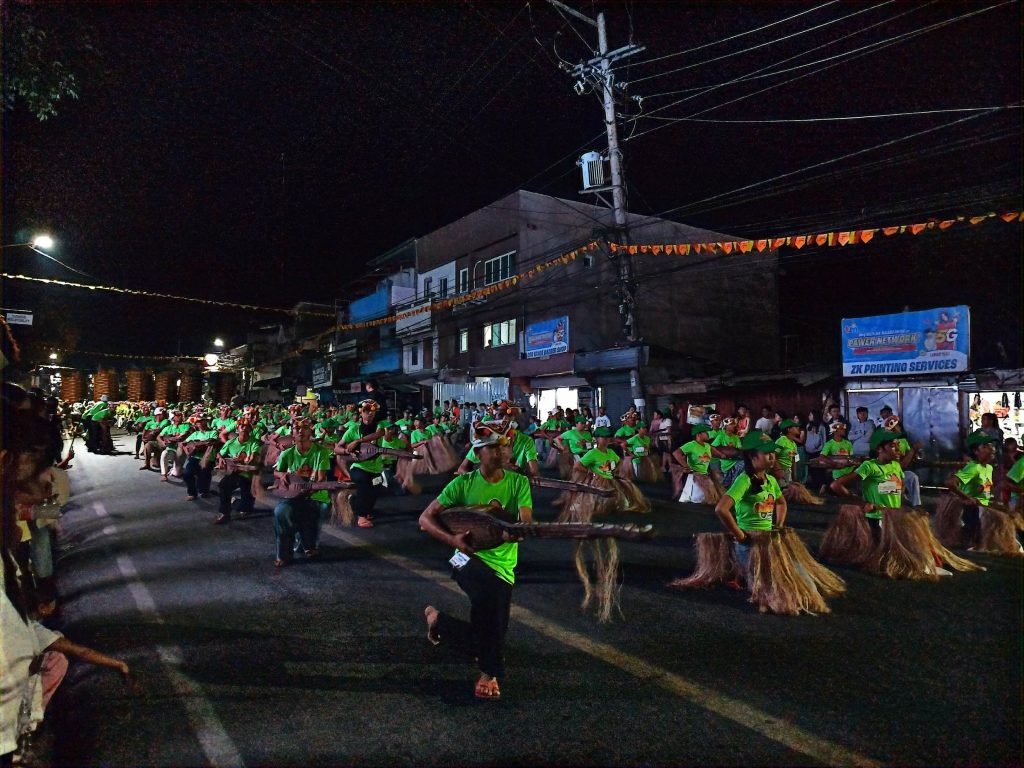
Dancers from the Municipality of Malitbog, Bukidnon/All photos by the author.
K.A. Ga is a volunteer documenter and graphic designer for BukidnonNews.Net. She works as a non-teaching staff of an office in Bukidnon State University. She said she volunteers so she could learn more about the community and the skills of documentation and reporting.
Note: Kaamulan rehearsals underscore SDG 11 on culture and community spaces, while touching on SDG 16 on public safety.