


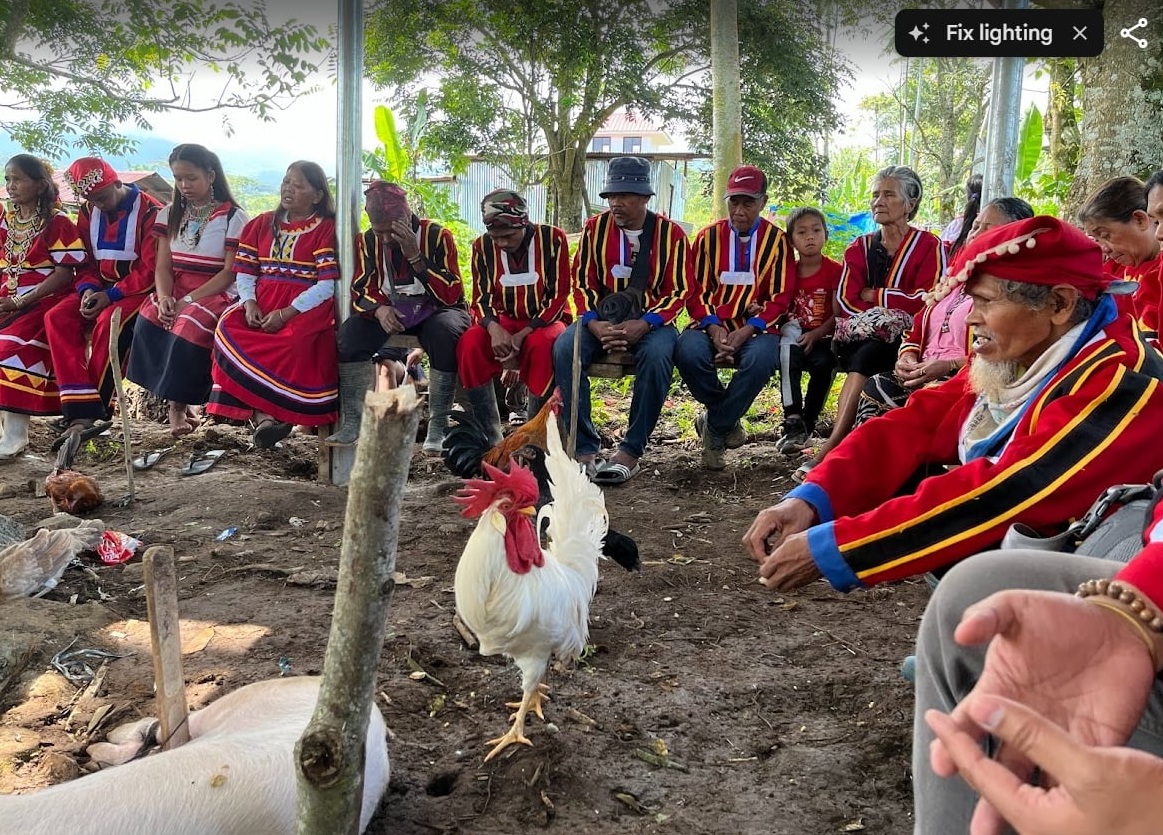
MALAYBALAY CITY (BukidnonNews.Net / April 20, 2026) — The Bukidnon Daraghuyan, an Indigenous community in Upper Dalwangan in this city is set to stage a three-day festival that blends culture, spirituality, and environmental stewardship.
From April 25 to 27, 2026 the Daraghuyan-Bukidnon community will host the 1st Daraghuyan Nature and Cultural Festival at its tribal village in Olanguhon, marking the anniversary of the Tulugan Heritage Center.
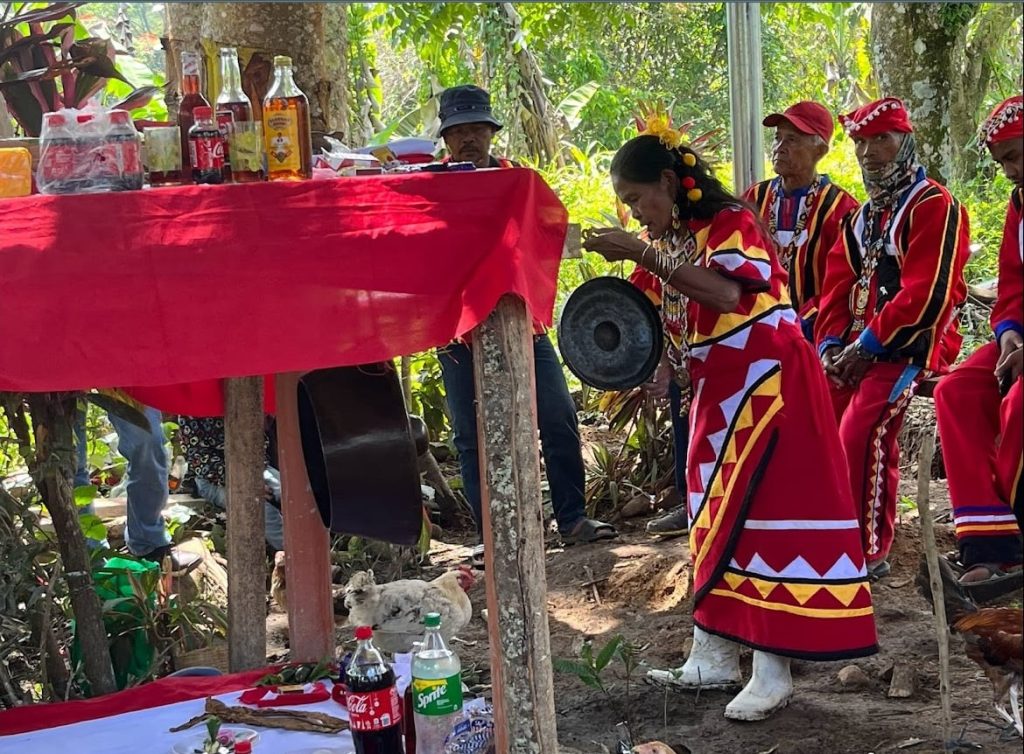
Bae Inatlawan Adelina Docenos Tarino, chieftain of the Bukidnon Daraghuyan,leads a ritual during the community celebration to mark the end of the month long Inigenous Peoples Month Celebration on October 2023/BukidnonNews.Net
Framed around the theme “Prayers for Global Peace, Order and Stability Towards Sustainable Development ,” the festival aims to showcase what community leader Bae Inatlawan Adelina D. Tarino described as their “living cultures and traditions” while highlighting the role of Indigenous knowledge in sustaining both people and ecosystems.
Tarino said in Binukid the festival, both a celebration and an invitation, is called Daraghuyan ha katun anan ha pig alundug.
She added that the event is a way to present the community’s journey and gains over the years, particularly in protecting their ancestral domain and advancing sustainable development.
“We want our friends and support groups to experience our living cultures and traditions,” she said in her April 20, 2026 letter, inviting guests to the three-day gathering.
Built on decades of stewardship
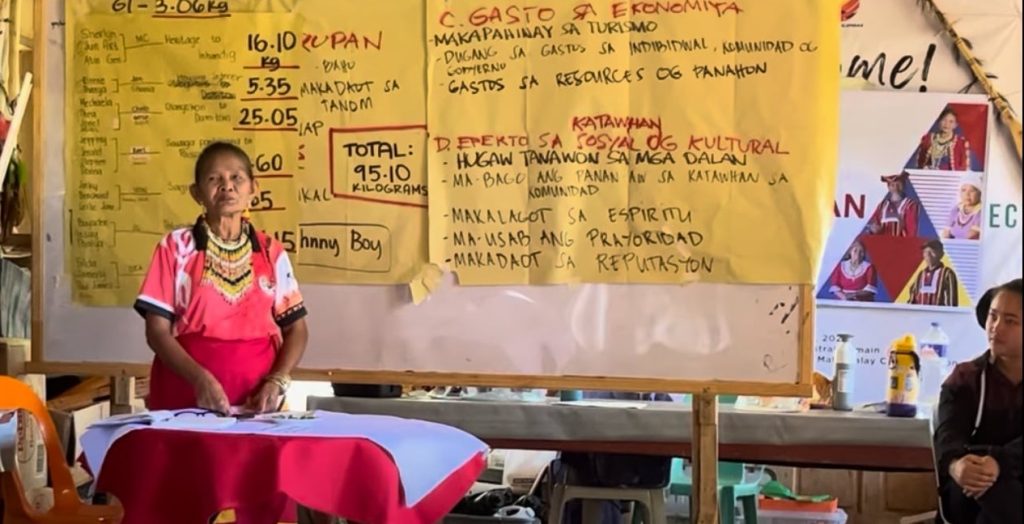
Bae Inatlawan Adelina Docenos Tarino, chieftain of the Bukidnon Daraghuyan, shares insigths during the presentation of results of a water assessment project with partners./BukidnonNews.Net
The Daraghuyan community’s festival emerges from decades of environmental and cultural work.
Since 1997, the group has partnered with the Department of Environment and Natural Resources–Mt. Kitanglad Protected Area Management Board, local government units surrounding the park, and civil society groups such as the Kitanglad Integrated NGOs, Inc.
Their ancestral domain, recognized through a Certificate of Ancestral Domain Title in 2009, lies within the Mt. Kitanglad Range Natural Park—one of the country’s most active protected areas.
Tarino said the community has “proven track record in promoting and using cultural norms and sacred traditions” to support forest protection, biodiversity conservation, and non-destructive livelihoods.
She emphasized that these efforts have strengthened their resilience and sustained both upland and lowland communities.
“We are ever proud of our protected forests, sacred zones, rivers, creeks, springs, trees, animals, spirit guardians—all part of ecosystems that sustain our lives, culture and heritage,” Tarino said.
She noted that these natural systems also serve as “pillars of life to the people in the lowlands, in the cities, near or far.”
Festival as cultural assertion and peace offering
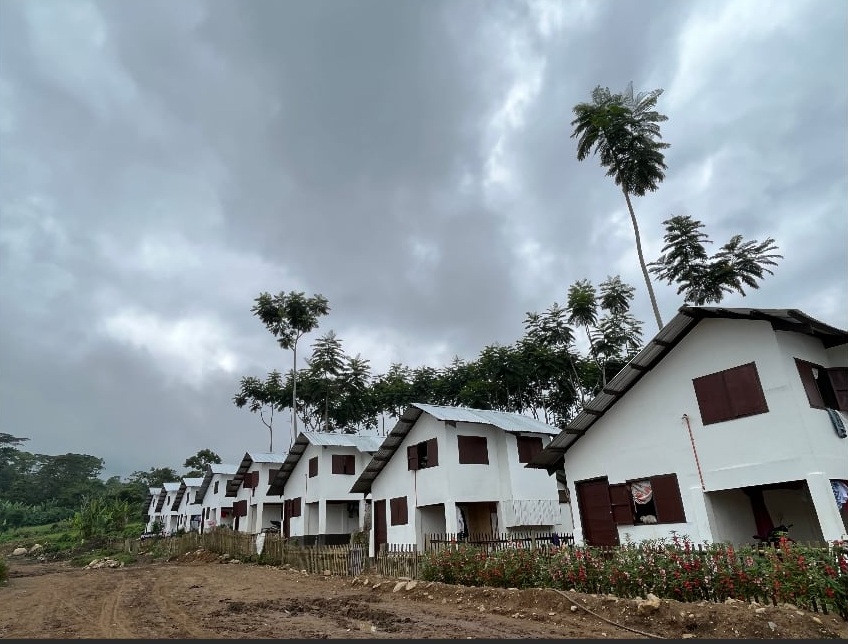
The 80-unit Tribal Housing Project of Bukidnon Daraghuyan with the National Housing Authority and the City Government of Malaybalay/BukidnonNews.Net
Beyond celebration, the festival carries a spiritual and political message.
On the evening of April 26, the community will hold the Kaliga Ritual, an overnight ceremony involving prayers, lamentation, dance, and gong drumming that will continue until dawn. Adult members of the tribe are expected to remain awake to sustain continuous chanting.
Tarino said the ritual will include prayers not only for the community but for global concerns.
“The rituals offered in this occasion will also include prayers to end the armed conflicts, for peace and forgiveness to reign; for solidarity in all of humanity, and in safeguarding of nature,” she said.
She linked this to broader global tensions, noting rising fuel costs tied to ongoing international conflict, and underscored a shared human responsibility under “one grace from Magbabaya.”
Three days of culture, learning, and community engagement
The festival opens on April 25 with registration, rituals, and a welcome program featuring cultural performances by youth tribal artists, followed by messages of support from government, Indigenous groups, and partner institutions.
Participants will also tour ongoing development initiatives in the village, including housing projects supported by the National Housing Authority and local government, solar power installations, road networks funded by national and international partners, and livelihood projects such as weaving, coffee production, and soil painting.
Interactive sessions will allow visitors to learn Binukid language basics, traditional songs and dances, abaca weaving, and Indigenous art forms.
A bonfire night will close the first day with performances, poetry, and music.
The second day includes tribal games and hands-on learning sessions on soil painting, drumming, and dance. In the afternoon, elders will lead Lambaga conversations, a dialogue space among community knowledge holders.
Preparations will then lead into the Kaliga ritual in the evening.
On April 27, the ritual concludes at dawn, followed by closing activities including solidarity messages and the signing of a “Freedom Wall.”
Development gains and continuing transitions
Tarino also pointed to recent developments in the village, including the ongoing construction of a cemented road linking the community to the Dalwangan highway, now about 50 percent complete.
She said these improvements have made the area more accessible, with remaining sections already passable.
The Tulugan Tribal Hall, also known as the Mt. Kitanglad Cultural Center, built in 2007 through support from the World Bank Small Grants for Indigenous Peoples, will serve as a central venue for festival activities.
Grounded in law and self-determination
Tarino underscored that the community’s progress is anchored in national policies that recognize Indigenous rights and environmental protection.
She cited the National Integrated Protected Areas Act of 1992 (RA 7586) and the Indigenous Peoples Rights Act of 1997 (RA 8371) as key legal frameworks that enabled their self-determination and governance.
These laws, she said, “facilitated our self-determination and governance” and reinforced the role of culture and traditions in building “just and equitable societies.”
Invitation to witness and support
The Daraghuyan community has called on partners, allies, and the public to attend the festival or send messages of support.
Tarino said contributions—whether through participation, resources, or symbolic offerings—will help sustain the community’s efforts for future generations.
“We believe your humble offering and our acceptance of your generosity will go a long way toward our succeeding generations,” she said. (BukidnonNews.Net)