
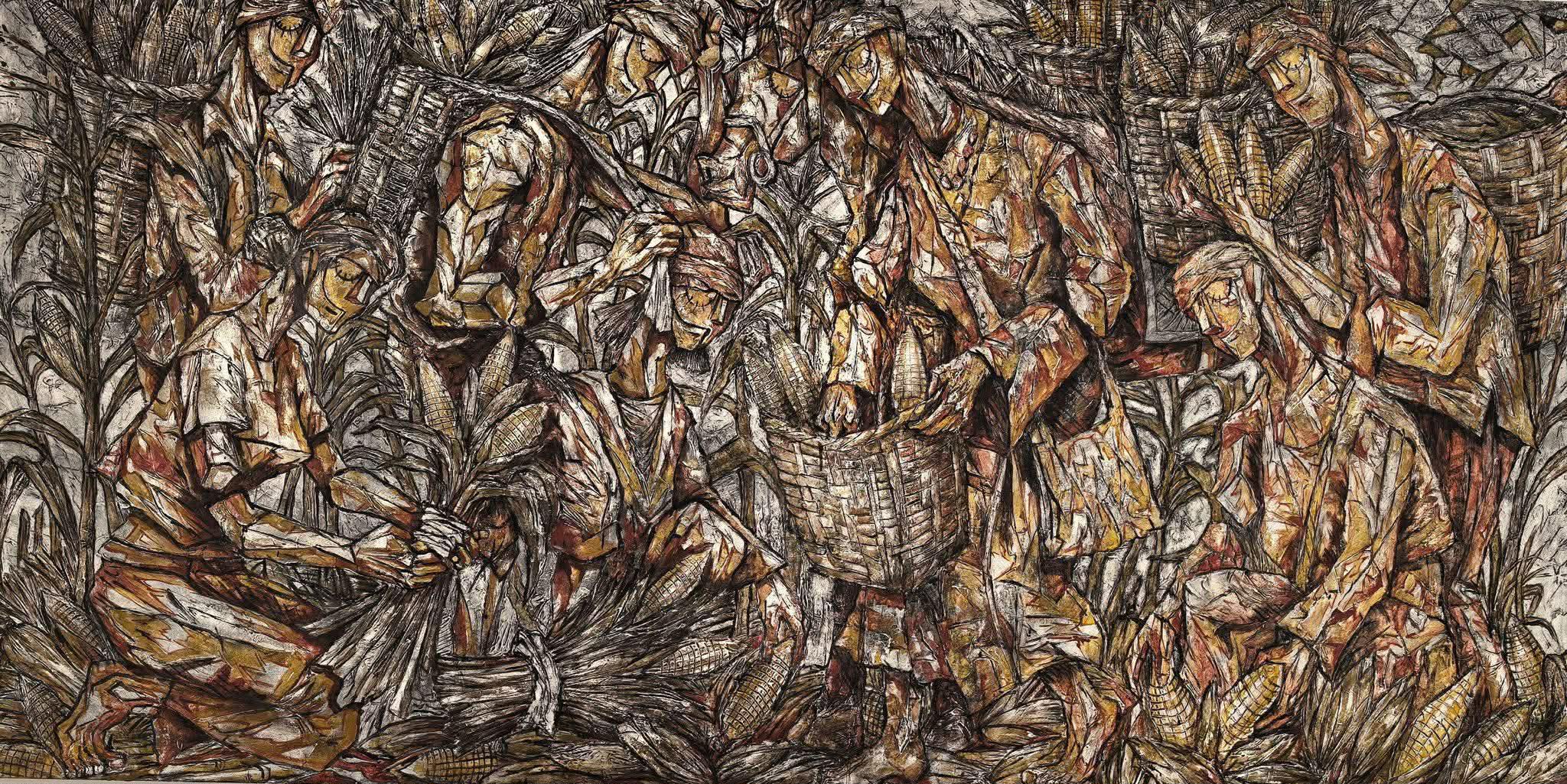
MALAYBALAY CITY (02 April 2026/Bukidnon News) — An award-winning soil painting depicting the gathering of leftover corn has sparked calls for stronger government support for farmers in Bukidnon, where 27 percent of residents remain in poverty despite the province’s reputation as a food basket.
Phel Picao Salmasan, a public school teacher and soil artist, won the professional category of the Kaamulan Soil Painting Competition 2026 for his 4×8-foot piece titled “Himaya sa Yuta.” He outperformed 36 other entries in the competition themed “Hulagway sa Yuta: Celebrating Bukidnon’s Seven Tribes Through Soil Art,” earning a P100,000 prize.
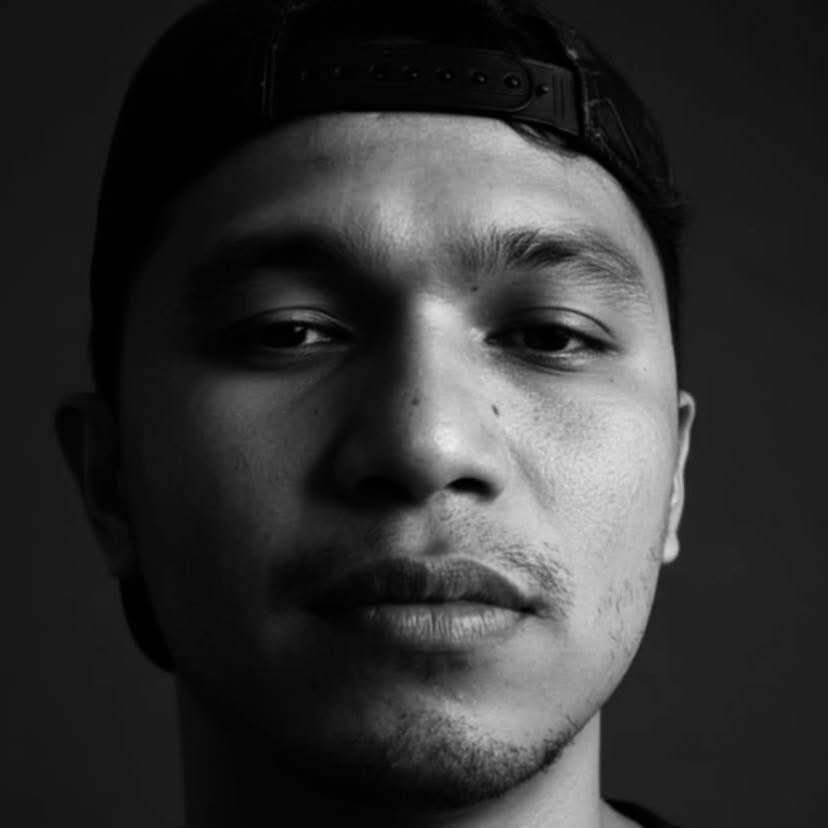
Salmasan’s artwork centers on panghagdaw—the practice of gathering leftover corn cobs after harvest—rooted in his childhood experiences among farm laborers. He recalled that while his father raise livestock as source of income, they usually rent a parcel of farm lot to plant banana and palay. He said the image captures both abundance and inequality in agricultural communities.
The practice also points to deeper structural problems in agriculture, particularly landlessness and unequal access to resources among small farmers—issues officials likewise underscored during the 2026 Bukidnon Anti-Poverty Summit.
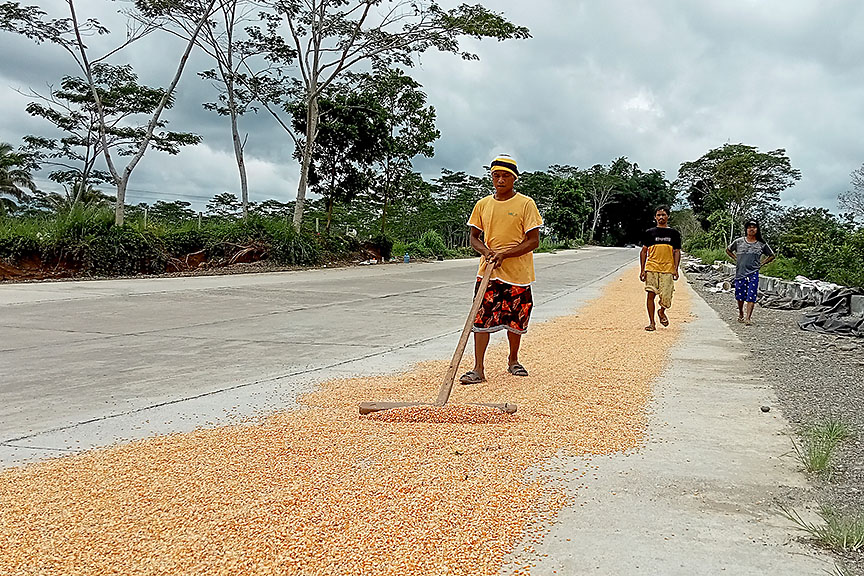
In Bukidnon, corn dominates upland farming, yet many farmers remain among the poorest and still lack access to basic services, according to the Environmental Science for Social Change (ESSC). High-yield varieties promise larger harvests, but their costs often push small farmers into debt. When crops fail or prices fall, some farmers sell their land. These pressures, combined with declining soil health, underscore the need for more sustainable farming systems and stronger government support.
“Not all people have the opportunity to harvest. Some have no choice but to gather leftover corn just to have food and earn a little,” Salmasan said. Through this imagery, he called for stronger support systems for farmers, particularly in land access, affordable inputs, and fair market conditions.
“Kulang gyud ang support (The support falls short),” he added when asked, stressing that farmers need affordable fertilizers, seeds, and other inputs, along with stricter regulation of traders who buy produce at low prices but sell at standard market rates.
He also underscored the urgency of addressing land access among small farmers.
“Dapat matag farmer mahatagan kay patas man ta tanan nanginabuhi aron sab dili na sila manghagdaw sa yuta nga dili ilaha (Every farmer should be given a fair chance to have land, so they can earn a living with dignity and no longer have to gather leftover corn from land they do not own),” he said.
Salmasan’s call echoes concerns raised during the 2026 Bukidnon Anti-Poverty Summit, where officials reported that 27 percent of residents live below the poverty line—the highest in Northern Mindanao. The National Anti-Poverty Commission noted that many small farmers do not own the land they till, leaving hinterland communities among the most affected.
Senator Juan Miguel “Migz” Zubiri, who attended the summit, led officials in setting a target to reduce poverty incidence in the province to 19 percent within two years, focusing on job creation, improved access to basic services, and support for Indigenous Peoples.
Salmasan described Bukidnon’s agricultural situation as “exceptional,” noting that stronger institutional support could further expand its productivity.
“If the government fully supports farmers—through seeds, technology, and financing—Bukidnon can produce more and reach greater potential,” he said.
BukidnonNews.Net has yet to draw reactions from concerned government offices regarding the artist’s call.
Salmasan employs a Cubist style—breaking images into simple shapes—to present layered perspectives of farmers’ lives beyond what is immediately visible.
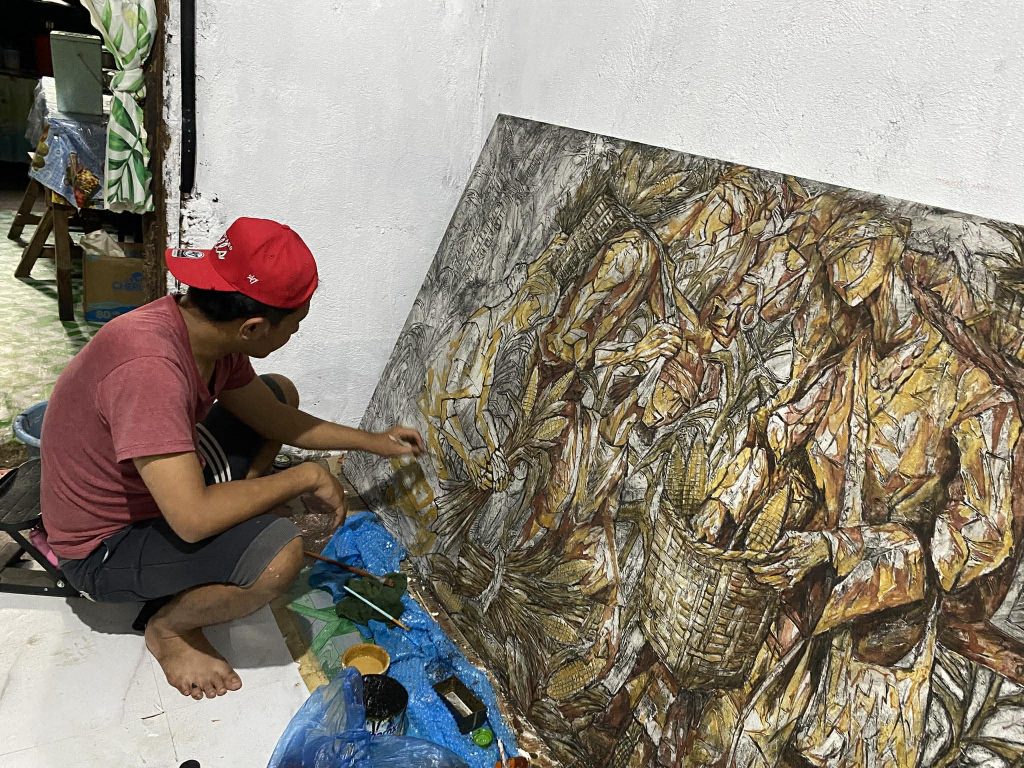
He began painting in 2010 and started using soil as a medium in 2023, drawing inspiration from fellow members of the Bukidnon Local Artists Kolektib (BuLAK). He completed his winning piece in five days using yellow soil from Talakag, red soil from Cabanglasan, and black soil from Quezon.
He also acknowledged the influence of other artists in shaping his craft, including the late Nonoy Estarte of Xavier University, whom he considers a mentor, as well as Kublai Millan, Celso Pepito of Cabanglasan, and National Artist Ang Kiukok.
Salmasan emphasized the need to further develop and promote soil painting, noting that Bukidnon continues to gain recognition as the soil painting capital of the Philippines.
“Nagpakita sab kini ug gugma sa yutang Bukidnon (It shows love for the land of Bukidnon),” he said.
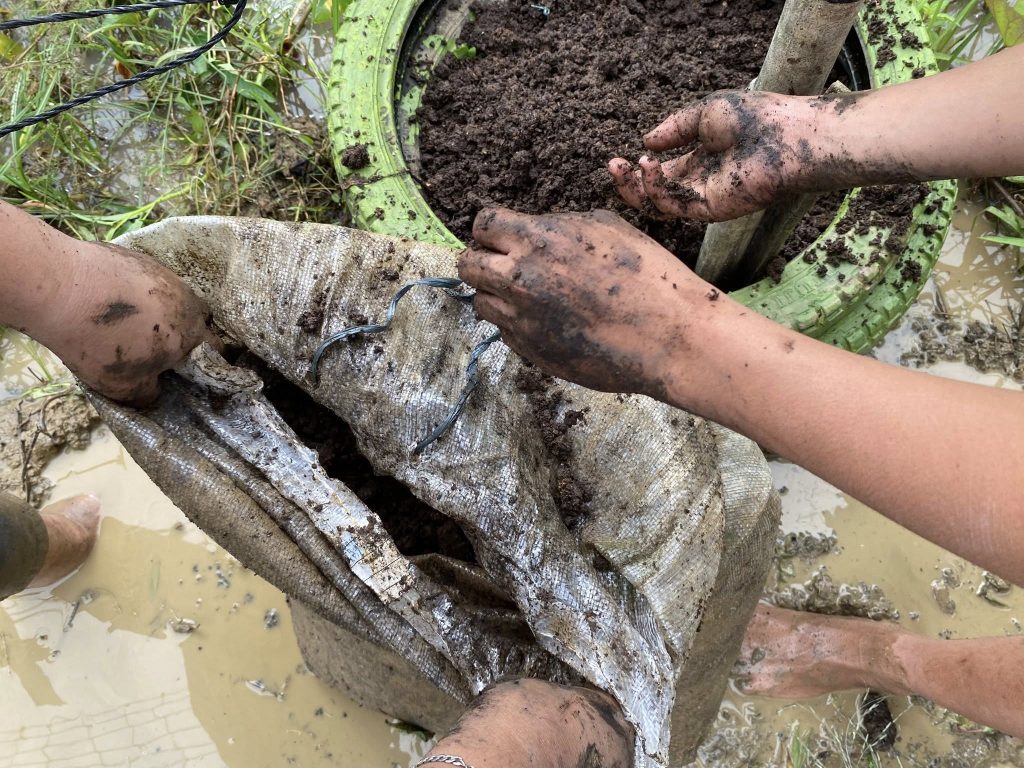
He added that the province has about 27 natural soil color variations, contributing to the uniqueness of the art form. He expressed hope that soil painting would attract more tourists by telling the stories and cultural heritage of Bukidnon’s people.
He also noted that soil painting remains accessible because it does not require expensive materials.
Salmasan highlighted the importance of nurturing young talent in the visual arts, noting that their initiatives have already produced regional and national winners among schoolchildren.
He said artists play a vital role in drawing attention to people’s unmet needs and helping those in authority better understand the realities of poverty.
“Through art, we can connect with leaders so they see that many are still struggling,” he said.
For Salmasan, soil painting goes beyond aesthetics—it serves as a platform to amplify voices often unheard.
“Artists can speak for those who cannot,” he added. (Contributed to BukidnonNews.Net by Walter I. Balane of Bukidnon State University)
Leave a Reply